
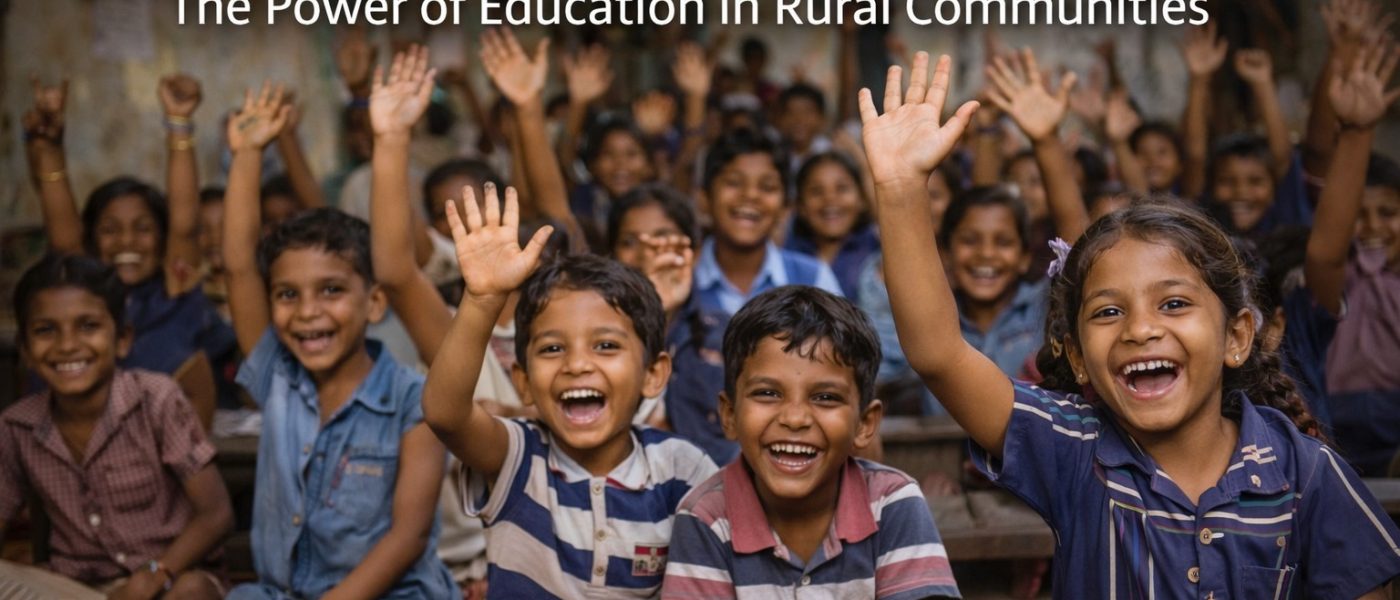
Introduction: A Village. A Dream. A Future.
Picture a 10-year-old girl named Ananya. She wakes up before dawn in a small village in Andhra Pradesh — not to study, but to fetch water from a well nearly two kilometres away. By the time she reaches school, tired and hungry, she’s already missed the first class. Her school has three rooms for six grades. Her teacher, responsible for four different subjects, tries her best with 60 students and almost no teaching aids. Ananya is bright, curious, and full of questions the world has never bothered to answer for her yet.
Now imagine that same girl, 15 years later, working as a healthcare professional in her district — because someone believed in her enough to keep her in school, support her family through a tough harvest season, and give her a scholarship when she cleared her Class 10 exams with distinction.
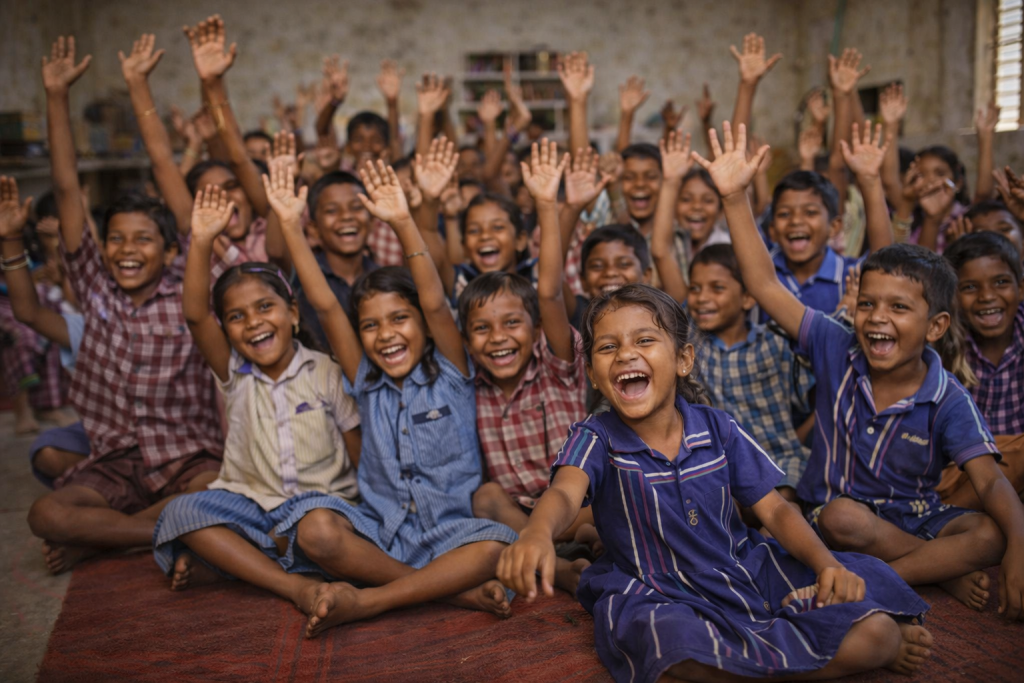
That transformation — from struggle to strength, from potential to purpose — is the power of education in rural communities. And it is not a fantasy. It is happening right now, in villages across India, wherever people with purpose decide to act.
This article explores why rural education matters more than ever, what obstacles hold it back, and how organizations like Sri Muvva Foundation are proving that when you invest in a child’s education, you invest in the future of an entire community.
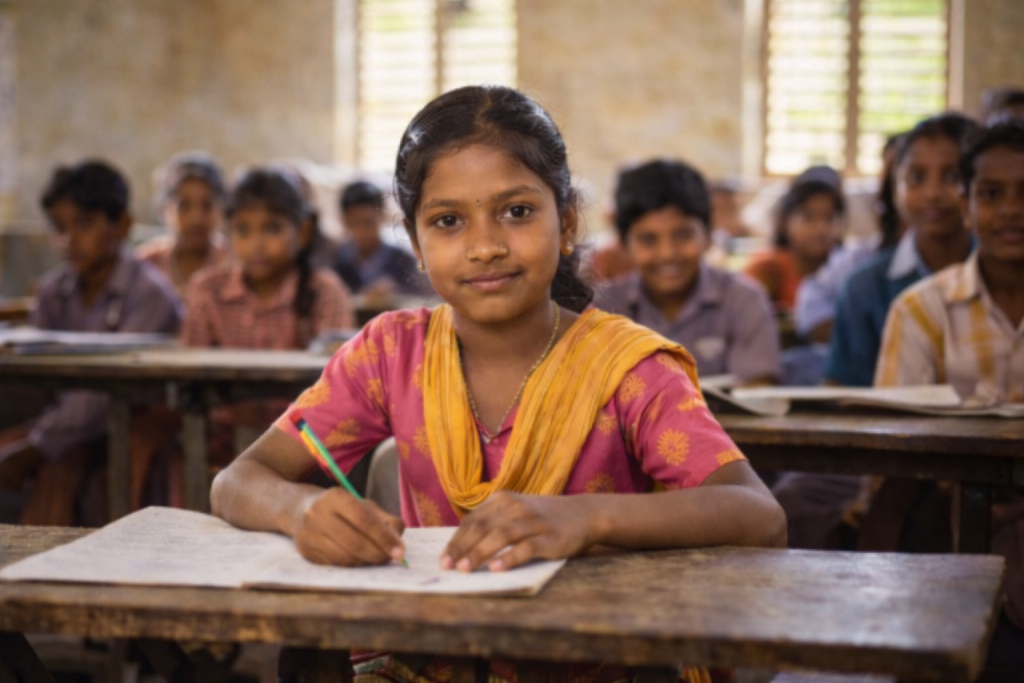
The State of Rural Education in India Today
India has made remarkable strides in education over the past two decades. Primary school enrollment has climbed close to universal levels. Literacy rates have improved substantially. And yet, the gap between urban and rural education remains one of the most stubborn inequalities in the country.
Why Rural Children Fall Behind
Rural children do not fall behind because they are less capable. They fall behind because they face a stacked deck. The infrastructure isn’t there. The teachers are overstretched. The families need income now, not promises of future returns on a degree. And the system, though well-intentioned, often fails to meet the real, specific needs of rural learners.
According to multiple national surveys and ASER (Annual Status of Education Report) findings, a significant portion of children in rural India who complete primary school still struggle with foundational literacy and numeracy. This is not a failure of the children — it is a failure of systems that were not designed around them.
The Numbers That Break Your Heart (And Should Inspire Action)
- Over 300 million people in India still live in rural areas where quality education access remains inconsistent.
- More than 40% of government school teachers in rural districts handle multiple grade levels simultaneously.
- Girls from rural areas are significantly more likely to drop out of school after puberty due to safety concerns, household responsibilities, and early marriage pressures.
- First-generation learners (children whose parents never attended school) have the highest dropout risk but also the highest potential for generational change.
These numbers are not meant to overwhelm — they are meant to ignite. Because behind every statistic is a story waiting to be rewritten.
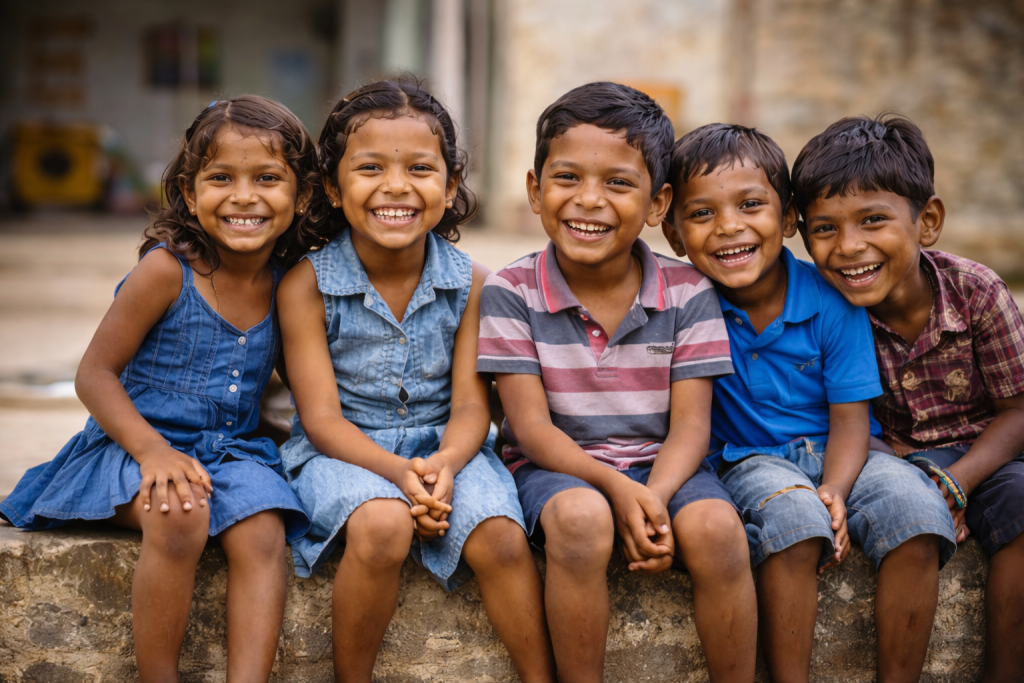
The Power of Education: More Than Just Books
We tend to think of education in narrow terms — classrooms, textbooks, exams, certificates. But the power of education is far broader, deeper, and more transformative than any formal curriculum.
Education as the Great Equalizer
Throughout history, access to education has been one of the most reliable pathways to social mobility. The child of a farmer who learns to read, reason critically, and communicate effectively gains access to a world that was previously closed to her family. Education does not just teach skills — it expands the horizon of what someone believes is possible for themselves.
In rural communities specifically, education reshapes power dynamics. It helps communities navigate bureaucratic processes, understand their legal rights, make informed health decisions, and participate meaningfully in local governance. These are not abstract benefits — they are concrete, everyday advantages that change how a family lives and what opportunities their children inherit.
How Education Breaks the Poverty Cycle
The relationship betweenducation and poverty is well-documented and deeply interconnected. Poverty causes low educational attainment, and low educational attainment perpetuates poverty. Breaking this cycle requires deliberate, sustained intervention — and education is the single most powerful lever available.
Research consistently shows that each additional year of schooling increases an individual’s earning potential significantly. For girls in developing regions, the effect is even more pronounced — educated women marry later, have fewer and healthier children, invest more in their own children’s education, and contribute more productively to local economies. Education, in other words, is not just a personal benefit. It is a community dividend.
The Ripple Effect — One Educated Child Changes a Family
This is perhaps the most underappreciated aspect of rural education investment: the ripple effect. When one child in a household gets a quality education and transitions to a stable, skilled livelihood, the entire family’s circumstances shift. Siblings become more likely to stay in school. Elderly parents gain financial security. The next generation starts with more resources, more confidence, and more access.
This is why supporting education in rural communities is not charity — it is infrastructure. It is the invisible foundation on which stronger communities are built, one classroom, one scholarship, one life at a time.
“Give a man a fish and you feed him for a day. Teach a man to fish and you feed him for a lifetime.” — The same logic applies to communities. Educate a child and you feed a generation. |
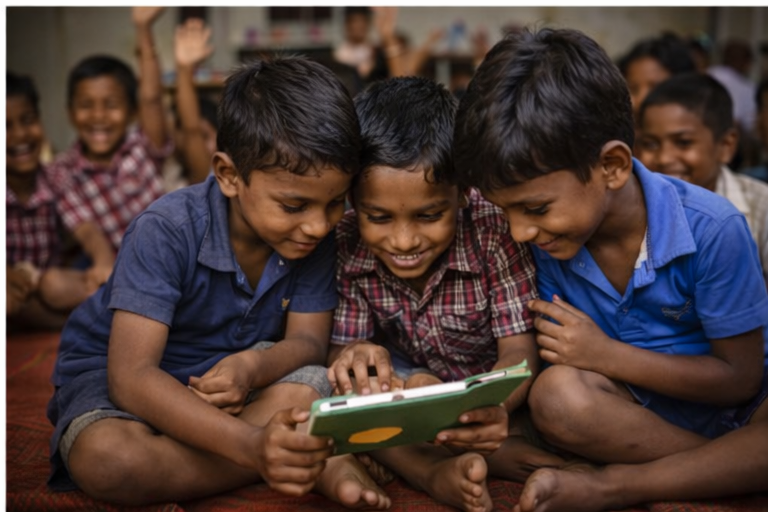
What Holds Rural Education Back? Key Challenges
To solve a problem, we must first understand it honestly. Rural education faces a layered set of challenges, and only by addressing them together can we hope to create lasting change.
Infrastructure Deficits
Many rural schools across India still lack basic infrastructure — functional toilets (especially for girls), clean drinking water, electricity for digital learning, proper classrooms, and libraries. When a girl’s school does not have a functional toilet, her attendance drops dramatically at the onset of puberty. When a school doesn’t have electricity, digital learning tools become irrelevant.
Infrastructure is not glamorous. It doesn’t make for inspiring social media posts. But it is the foundation on which everything else — quality teaching, student retention, parental confidence — depends.
Social Barriers and Gender Bias
In many rural communities, education for girls is still seen as a lower priority than education for boys. Cultural norms around early marriage, concerns about safety during commutes to school, and the expectation that girls will manage household responsibilities can all work against a girl’s ability to continue her education beyond primary levels.
Similarly, children from marginalised caste communities often face discrimination that affects their comfort in school, their relationships with teachers, and their long-term academic confidence. Addressing education in rural India means addressing these social realities head-on.
Economic Pressures on Families
For many rural families, every family member is a potential source of income or labor. Sending a child to school means forgoing their contribution to farming, domestic work, or earning casual wages. Even when government schools are nominally free, the indirect costs — school uniforms, stationery, transportation, meals — can be prohibitive for the poorest families.
This is why financial support programs — scholarships, mid-day meals, free uniforms and books — are not supplementary to education programs. They are central to keeping children in school.
Sri Muvva Foundation: Turning Roots Into Purpose
Who Is Sateesh Muvva? The Man Behind the Mission
Some of the most powerful philanthropic stories begin not in boardrooms or conference halls, but in small villages where a child grows up watching the world from a distance — and decides, one day, to reach back and pull others forward.
Sateesh Muvva is also known as Sateesh Reddy Muvva one such story.
Born and raised in Pedaparimi, a small village in Andhra Pradesh, Sateesh grew up deeply familiar with both the beauty and the limitations of rural life. The fields, the community, the simplicity — but also the lack of opportunity, the struggle for basic resources, and the sense that the world beyond the village was somehow out of reach.
In the early 2000s, Sateesh made a bold move — he relocated to Australia with almost nothing but determination. He started at the bottom, working at a petrol station, learning the ropes of a completely new economy and culture. Through years of discipline, consistency, and quiet effort, he built what would become the Srini Group — a successful enterprise spanning fuel retail, real estate development, and community services across Australia.
But as his success grew in Australia, his heart never left Pedaparimi.
“In 2015, I set up the Sri Muvva Foundation, in memory of my late mother, with one goal: to make life in our village just a little better than how we found it.” — Sateesh Muvva Reddy |
In 2015, driven by love for his hometown and in memory of his late mother, Muvva Hemalatha, Sateesh established the Sri Muvva Foundation. It was not born from corporate strategy or PR necessity — it grew out of a deeply personal sense of responsibility. As he has said himself: “Philanthropy is a responsibility, not a choice.”
What Sri Muvva Foundation Is Doing for Rural Communities
Sri Muvva Foundation is a non-profit organization committed to empowering underprivileged communities through education, healthcare, and inclusive development. Based in Pedaparimi, Thullur Mandal, Guntur District, Andhra Pradesh, the Foundation operates on the belief that every small act can spark lasting change.
The Foundation’s work to date has already made a meaningful difference in the region:
- Clean Water Access: A state-of-the-art water purification plant was installed, providing clean drinking water to over 10,000 people every single day — a benefit that will serve the community for the next 25 years.
- Sanitation Projects: The Foundation has worked toward ensuring every household in Pedaparimi has access to proper sanitary facilities, addressing one of the core barriers to girls’ school attendance.
- Student Scholarships: Deserving students have been supported with scholarships, enabling them to continue their education without the burden of financial pressure on their families.
- Community Welfare: Spaces for elders, support for vulnerable community members, and a range of grassroots initiatives have been taken up — not as grand projects, but as genuine expressions of care for the village that raised the Foundation’s founder.
How You Can Be Part of the Change
The power of education in rural communities is not an abstract concept — it is a practical reality that is built, brick by brick, act by act, by people who decide to care.
Here are meaningful ways you can contribute to this transformation:
- Donate to Sri Muvva Foundation: Your contribution directly funds scholarships, infrastructure, and community welfare programs in Pedaparimi and the surrounding region. Every rupee is an investment in a child’s future.
- Sponsor a Student’s Education: Consider sponsoring the school fees, books, and uniforms of a rural student for a full academic year. The impact on that child — and their family — is immeasurable.
- Volunteer Your Skills: Are you an educator, technologist, healthcare professional, or communications specialist? The Foundation welcomes skill-based volunteering that multiplies its impact.
- Spread the Word: Share this article, follow Sri Muvva Foundation on social media, and tell your networks about the work being done. Awareness is the first step to action.
- Partner with the Foundation: Corporates and institutions looking to fulfil their CSR mandates with genuine, community-rooted impact are encouraged to reach out for partnership opportunities.
The road to educational equity in rural India is long. But with every school-going child, every scholarship awarded, every water point established, and every household given a proper toilet — the road gets shorter.
Conclusion: Every Child Deserves a Tomorrow
We began with Ananya — the bright-eyed girl from Andhra Pradesh who woke before dawn not to dream, but to work. We end with the knowledge that her story does not have to be defined by the circumstances of her birth.
The power of education in rural communities is not a slogan. It is a lived reality for every child who gets to stay in school because someone built them a toilet, provided them clean water, or gave their family a scholarship to ease the financial pressure. It is the story of Sateesh Muvva Reddy — who grew up in a village, built a life across the world, and came back to build something lasting for the people who gave him his roots.
The future of rural India does not lie in charity. It lies in investment — in children, in communities, in the belief that talent is universal even if opportunity is not. Sri Muvva Foundation stands as living proof that one person’s commitment to their community can ripple outward for decades.
Every child who learns today is a leader waiting to emerge tomorrow. And every one of us — whether we are donors, volunteers, teachers, or simply citizens who care — has a role to play in making that emergence possible.
Learning Today. Leading Tomorrow. This is not just the title of an article — it is an invitation. Join Sri Muvva Foundation in building the kind of rural communities where every child has the chance to learn, grow, and lead. Visit srimuvva.org to support, volunteer, or partner today. |
-Team Sri Muvva Foundation
Sri Muvva Foundation, a promising NGO, was started by Sateesh Muvva (Sateesh Reddy Muvva), a visionary and proven business leader and serial entrepreneur, at his very young age. The foundation is dedicated to creating positive social impact through meaningful CSR initiatives in Andhra Pradesh and Telengana


