
The Village That Changed Everything
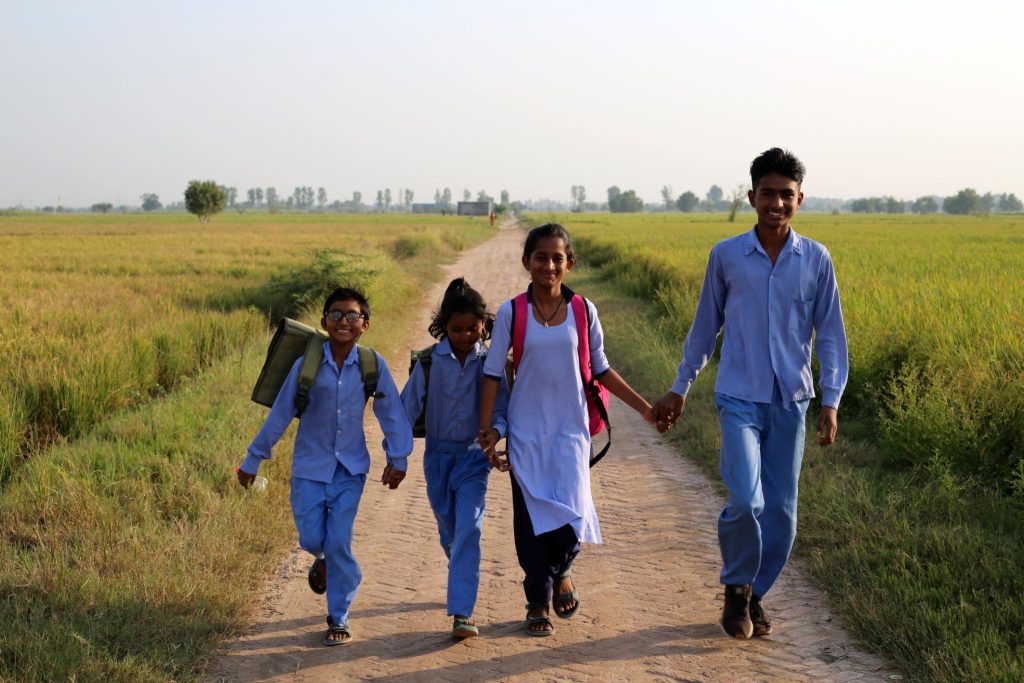
Picture a village in rural Andhra Pradesh. There is no clean running water. Children walk kilometres to a school with a missing roof. The elderly sit without proper care. Mothers deliver babies in homes that lack the most basic sanitation. This is not a scene from decades past — it is the lived reality of millions of Indians today.
Now, picture the same village five years later. A water purification plant hums at its edge, supplying clean, mineral-rich water to 10,000 people every single day. Toilets have been built in every household. Scholarships have sent the brightest village children to universities. An elder care space has taken shape where the community gathers.
What made the difference? Not a government scheme that sat in a file. Not a corporate press release. It was an NGO — a non-governmental organisation driven by purpose, proximity, and people.
Rural transformation in India is not a charity project. It is a movement. And NGOs are at its very heart. In this article, we explore why NGOs are the true backbone of rural development, the challenges they face, the impact they create, and how one extraordinary foundation is rewriting the story of an entire village in Andhra Pradesh.
What Is Rural Transformation? A Closer Look
Rural transformation is not just about building roads or supplying electricity. It is a holistic, multi-dimensional shift in the economic, social, and environmental fabric of rural communities. It means moving villages from dependence to self-sufficiency, from poverty to opportunity, from exclusion to inclusion.
According to the World Bank, nearly 900 million people still live in extreme poverty globally, and a disproportionate majority reside in rural areas of developing nations like India. In India specifically, over 65% of the population still depends on rural economies, yet access to quality healthcare, education, clean water, and economic opportunity remains deeply unequal.
True rural transformation involves five core dimensions: economic upliftment, social equity, environmental sustainability, health & nutrition, and educational access. NGOs, by their very nature, are uniquely positioned to address all five simultaneously — something no government department or corporate entity can replicate at the grassroots level.
The NGO Advantage: Why Governments Alone Can't Do It All
India’s government runs some of the world’s largest rural development programmes — MGNREGS, Swachh Bharat Mission, Jal Jeevan Mission, and PM Gram Sadak Yojana, to name a few. These schemes are vital. But they have structural limitations that make them insufficient on their own.
The Last-Mile Problem
Government schemes are often designed at the state or national level and then filtered down through bureaucratic channels. By the time resources reach the most remote villages, they are diluted — delayed by red tape, lost in poor administration, or simply misaligned with the community’s actual needs.
NGOs, on the other hand, operate from the ground up. They are physically present in the villages. They know which families are at risk, which wells are contaminated, and which girls drop out of school because of menstrual health taboos. Their on-the-ground intelligence is irreplaceable.
Speed and Agility
A government body might take 18 months to approve a water and sanitation project. A committed NGO can mobilise funds, design a solution, and begin execution within weeks. Speed is not a luxury in rural communities — it is often a matter of life and death.
Community Trust
NGOs build trust over years of consistent presence. Villagers open up to NGO workers in ways they never would to a government officer. This trust enables NGOs to address sensitive issues — domestic violence, child marriage, caste discrimination — that government programmes rarely touch.
India has over 3.3 million registered NGOs — one for every 400 Indians. Yet fewer than 10% are genuinely active in rural transformation work. The ones that are, however, are changing millions of lives.
Five Pillars of Rural Transformation NGOs Focus On
The most effective rural development NGOs don’t pick one issue and stop. They recognise that poverty is intersectional — it touches water, education, health, gender, and infrastructure all at once. Here are the five pillars where NGOs make the deepest impact.
Clean Water & Sanitation
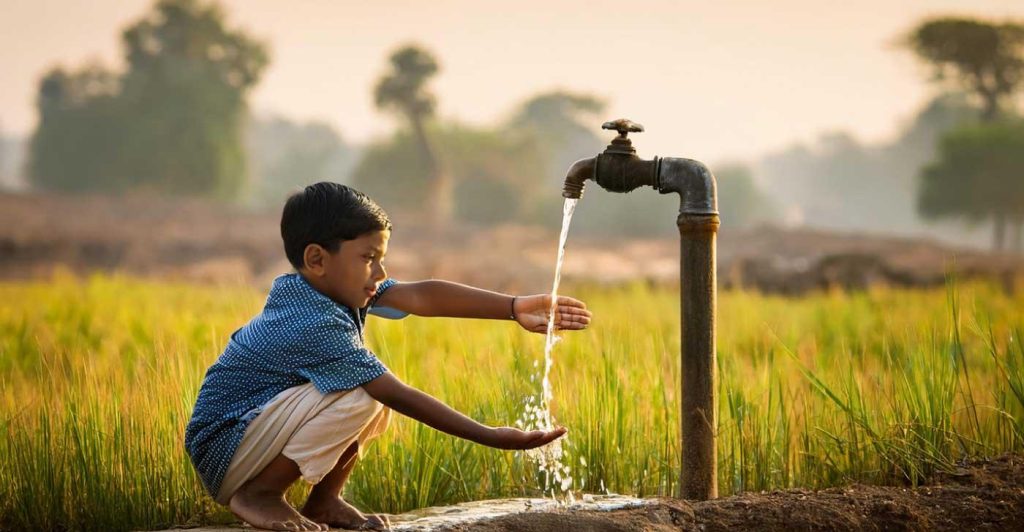
Safe drinking water is the foundation of all other development. Without it, children miss school due to waterborne illness, women spend hours fetching water instead of earning income, and communities remain trapped in cycles of ill-health and poverty.
According to UNICEF, approximately 163 million Indians still lack access to clean drinking water within 1 km of their homes. NGOs working in this space install water purification systems, maintain hand pumps, build community water storage tanks, and educate communities on hygiene practices.
Advanced NGO-funded purification systems now use micro-filtration and ozone technology to eliminate bacteria while retaining essential minerals — delivering water that is genuinely safe and nutritionally beneficial.
Education & Scholarships
India’s literacy rate is rising, but quality education in rural areas remains a distant dream. Teacher absenteeism, lack of infrastructure, language barriers, and poverty-driven dropouts — especially among girls — continue to rob rural children of their futures.
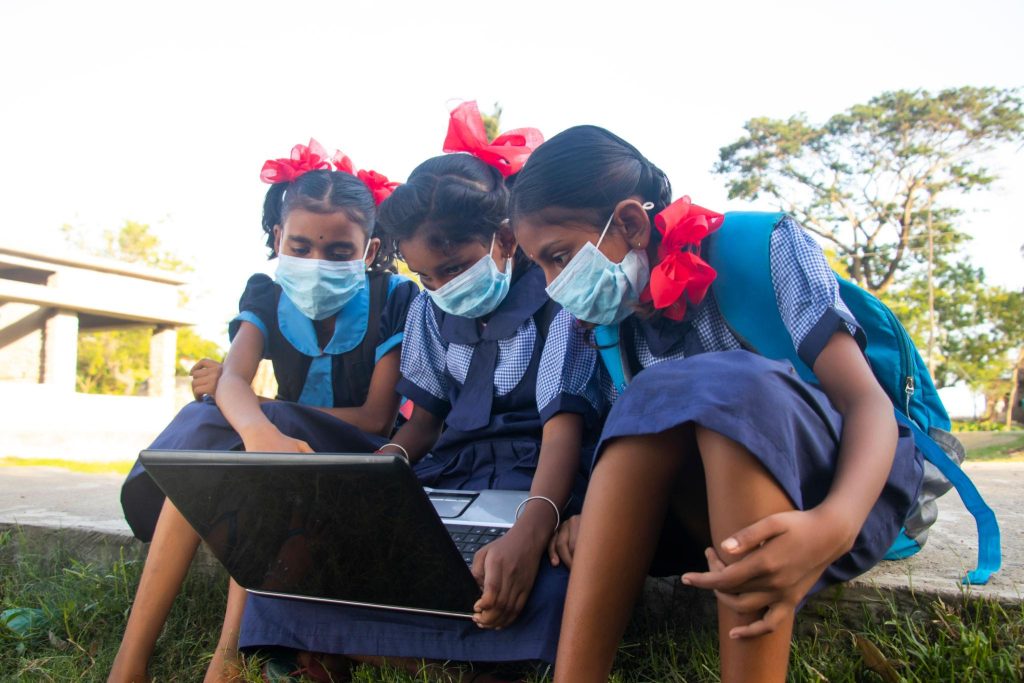
NGOs bridge this gap by funding scholarships, building classrooms, providing digital learning tools, training local teachers, and running after-school programmes that keep children engaged. First-generation learners who receive NGO scholarships often go on to become doctors, engineers, and entrepreneurs — and they come back to transform their own villages.
Healthcare Access
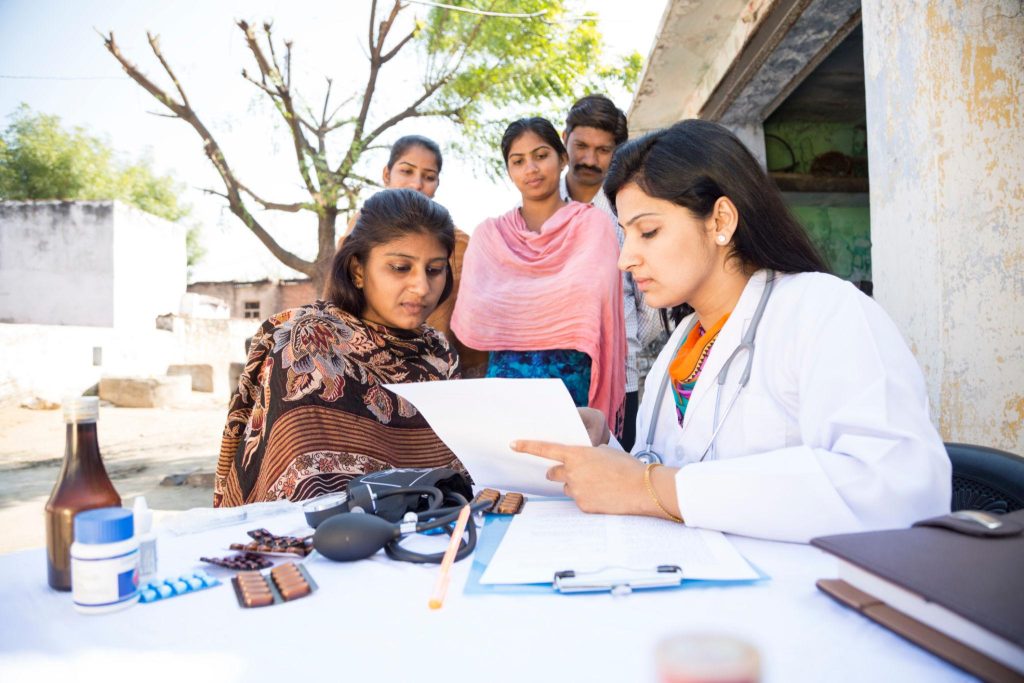
Rural healthcare in India is chronically underfunded. The doctor-to-patient ratio in rural India is nearly 1:11,000, compared to the WHO-recommended 1:1,000. Mobile health clinics operated by NGOs, maternal health camps, vaccination drives, and mental health awareness programmes fill critical gaps that save lives daily.
Women Empowerment & Livelihoods
Women are the most underutilised resource in rural India. When women are empowered — economically, socially, and politically — entire families and communities thrive. NGOs support women through self-help groups (SHGs), skill-building workshops, microfinance programmes, and legal literacy camps.
Studies consistently show that when women control household income, spending on children’s education and nutrition increases significantly. Women-led SHGs have transformed thousands of villages across Andhra Pradesh, Telangana, and Maharashtra.
Infrastructure & Senior Care
Beyond the ‘visible’ issues lie the quieter ones — proper roads, community halls, spaces for the elderly, and proper sewage systems. NGOs often build physical infrastructure that falls outside government priority lists. Elder care spaces, community libraries, and sanitation networks create dignity and social cohesion in villages where isolation and neglect are common.
Real Impact: What Data Says About NGOs in Rural India
| Metric | Value | Description |
|---|---|---|
| NGOs Registered | 3.3M+ | Total number of NGOs registered in India |
| Rural Population | 65% | Percentage of population living in rural areas |
| Without Clean Water | 163M | People lacking access to clean water |
| CSR Spending | ₹48,000 Cr+ | CSR spent in rural India (2023) |
| Child Malnutrition | 40% | Children malnourished in rural areas |
| Doctor-Patient Ratio | 1:11,000 | Rural doctor-to-patient ratio |
These numbers are sobering — but they are also a call to action. Every statistic represents a human being, a family, a community waiting for change. And behind each success story is usually a dedicated NGO that refused to give up.
Research by the Indian Council of Social Science Research (ICSSR) found that villages with active NGO presence show 27% higher school enrolment rates, 34% lower incidence of waterborne diseases, and 19% higher household income growth compared to villages without NGO engagement.
How NGOs Bridge the Last-Mile Gap
The concept of the ‘last mile’ is borrowed from logistics — it refers to the final, most difficult leg of delivering something to its destination. In rural development, the last mile is the remotest, most underserved community: the tribal hamlet, the drought-affected district, the flood-prone riverine village.
NGOs bridge the last-mile gap through three distinct mechanisms:
- Community Mobilisation: They train local youth and women as community health workers, water committee members, and self-help group leaders. This creates a self-sustaining ecosystem of change agents within the village itself.
- Needs-Based Intervention: Unlike top-down government schemes, NGO programmes are designed through direct community consultation. The villagers themselves identify the priority — and the solution is co-created, not imposed.
- Monitoring & Accountability: NGOs maintain close follow-up on the impact of their interventions. They measure outcomes — litres of clean water distributed, students retained in school, women earning independent income — and adjust their approach accordingly.
This community-embedded, data-informed, and relationship-driven approach makes NGOs irreplaceable in the rural transformation ecosystem.
Challenges NGOs Face in Rural Transformation
Despite their extraordinary impact, NGOs working in rural transformation face formidable challenges. Understanding these challenges helps donors, volunteers, and policymakers provide the right kind of support.
Funding Constraints
Most rural NGOs operate on tight budgets, dependent on donor cycles, CSR grants, and government project-based funding. Long-term, sustained programmes are difficult to run when income is unpredictable. Infrastructure and clean water plants require significant upfront capital that many organisations struggle to secure.
Regulatory Complexity
India’s NGO sector is governed by multiple regulatory frameworks including the FCRA (Foreign Contribution Regulation Act), Companies Act, and state-level registration requirements. Compliance demands time and resources that many smaller NGOs cannot afford, sometimes forcing them to reduce their field activities.
Talent Retention
Attracting qualified professionals — engineers, doctors, educators, data analysts — to work in remote rural areas is a persistent challenge. NGOs often rely on passionate individuals willing to sacrifice higher salaries for meaningful work, but this model is not sustainable without better compensation structures.
Resistance to Change
In deeply traditional communities, social change — especially around gender roles, sanitation practices, or caste norms — is slow. NGOs must invest years in trust-building and awareness before communities are ready to change behaviours. This requires patience, cultural sensitivity, and long-term commitment.
The most impactful NGOs are those run by people who are personally connected to the communities they serve. When the founder has roots in the same soil, they understand the problems differently — not as outsiders looking in, but as insiders giving back
Spotlight: Sri Muvva Foundation & Founder Sateesh Muvva
Every great NGO has an origin story. The story of the Sri Muvva Foundation is one of the most compelling you will find — because it begins not in a boardroom or a policy meeting, but in a small village in Andhra Pradesh, with a boy who grew up watching his community struggle and promised himself he would come back.
The Man Behind the Mission: Sateesh Muvva
Sateesh Muvva is not your typical philanthropist. He is a visionary entrepreneur, the Chairman and majority shareholder of the Srini Group in Australia — a global enterprise spanning fuel retail, real estate development, and community welfare. But long before he built boardrooms in Sydney, he was a boy from Pedaparimi, a village in Guntur District, Andhra Pradesh.
He left India in the early 2000s for Australia, starting with no privilege and no shortcut. His first job was at a petrol station. He saved every coin. He built, slowly, relentlessly — and eventually created what is today the Srini Group, employing hundreds of people across Australia.
But success never made him forget where he came from. As Sateesh has reflected publicly:
Sateesh Muvva— Founder, Sri Muvva Foundation “All of the money you earn, you earn from society, which allows you to live your life. You should be willing to give back to society, no matter how big or small your contribution may be.” |
Founding the Sri Muvva Foundation — A Mother’s Legacy
In 2014–2015, inspired by his first cousin M.V. Rami Reddy, Sateesh Muvva founded the Sri Muvva Foundation — named in honour of his late mother, Muvva Hemalatha. The foundation was built with a single, clear mission: to make life in Pedaparimi village just a little better than how it was left.
It began as a personal act of love. It grew into a systemic movement for rural transformation.
Key Achievements of the Sri Muvva Foundation
💧 1. The Clean Water Revolution — Serving 10,000 People Every Day
Pedaparimi was previously dependent on imported water — unreliable, expensive, and often contaminated. Sateesh donated a ₹20 lakh state-of-the-art water purification plant that now supplies clean drinking water to over 10,000 villagers, every single day, for the next 25 years.
The system uses advanced micro-filtration and ozone technology to eliminate bacteria, prevent water wastage, and retain essential minerals. It is not just clean water — it is healthy water, engineered for rural India’s specific environmental conditions.
🚽 2. Comprehensive Sewage & Sanitation Infrastructure
Beyond clean water, the Sri Muvva Foundation funded the development of a comprehensive sewage system for Pedaparimi — working towards the goal of ensuring every single household has access to a proper toilet. This initiative directly addresses open defecation, reduces disease burden, and creates dignity — especially for women and girls.
🎓 3. Scholarships for the Next Generation
Education is generational change. The foundation has supported students from the village with scholarships, ensuring that financial hardship does not become a barrier to academic achievement. These scholarships target first-generation learners — young people whose parents never had the opportunity to attend university but whose children now do.
👥 4. Elder Care & Community Spaces
In a village where the elderly often go without proper care or social engagement, the Sri Muvva Foundation has supported the creation of spaces dedicated to the wellbeing of senior community members. These are not just physical structures — they are symbols of respect and community cohesion in villages where intergenerational bonds are the social fabric.
🌱 5. Environmental & Sustainability Initiatives
Under the Green Guardians flagship programme, the foundation actively involves local communities in recycling projects, waste management workshops, and eco-friendly practices. The foundation also collaborates with local artisans to create and market sustainable products from recycled materials — supporting livelihoods while protecting the environment.
🌏 6. Philanthropy Without Borders
True to his belief that giving knows no geography, Sateesh Muvva has also donated five acres of land to the Dapto Rotary Club in New South Wales, Australia, and makes regular contributions to cancer research charities. His philosophy is clear: philanthropy is responsibility, not charity.
The Philosophy That Drives Everything
What makes the Sri Muvva Foundation stand apart is not the scale of its projects — it is the philosophy behind them. Sateesh Muvva has never framed his work as charity. In his own words, these efforts are “extensions of responsibility.” They are not one-time donations made for public recognition. They are sustained commitments to a community that helped shape who he is.
His guiding principles — Global Thinking with Local Grounding; Purpose Before Profit; Philanthropy as Responsibility; People as the Core — are not corporate slogans. They are values earned through decades of hard work, humility, and a deep connection to the village of Pedaparimi.
As he summarises his philosophy: “True success isn’t what you take with you — it’s what you leave behind for others.”
The Sri Muvva Foundation is not just an NGO. It is a living proof that rural transformation is possible when it is driven by love, accountability, and the courage to return.
How You Can Contribute to Rural Transformation
You do not have to be a millionaire with a foundation to contribute to rural transformation in India. What you need is the will — and a clear idea of how your contribution, however small, creates ripple effects.
Donate to Trusted NGOs
Financial support is the most direct way to enable rural transformation. Whether it is ₹500 or ₹5,00,000 — consistent, recurring donations to registered, impact-verified NGOs like the Sri Muvva Foundation allow them to plan long-term projects, retain good staff, and scale their work.
Volunteer Your Skills
If you are a doctor, engineer, teacher, data analyst, marketing professional, or photographer, your skills are needed. Many NGOs are rich in intention but poor in specialised capacity. Pro bono professional support is often more valuable than money.
Spread the Word
Social media is the modern megaphone. Sharing the stories of impactful NGOs, tagging them in posts, writing about their work, or creating content that raises awareness costs nothing and can attract donors and volunteers who were never in the conversation before.
Partner as a Business
Businesses looking to fulfil their CSR obligations should consider channelling funds through small, focused NGOs working in rural transformation. The impact per rupee invested is often far greater than large, centralised CSR campaigns.
- Reach out to your local NGO networks to identify grassroots organisations near you
- Advocate for better policies that support and fund civil society organisations
- Mentor young social entrepreneurs building the next generation of rural NGOs
Conclusion — The Future Is Rural
India’s future will not be written in its cities alone. It will be written in the villages — in the clean water that flows from a purification plant in Pedaparimi, in the young girl from Guntur who became a doctor on an NGO scholarship, in the elderly man who has a warm place to sit and be seen.
NGOs are the backbone of rural transformation because they do what no government programme or corporate campaign can: they show up, stay present, build trust, and refuse to abandon communities until the work is done.
-Team Sri Muvva Foundation
Sri Muvva Foundation, a promising NGO, was started by Sateesh Muvva (Sateesh Reddy Muvva), a visionary and proven business leader and serial entrepreneur, at his very young age. The foundation is dedicated to creating positive social impact through meaningful CSR initiatives in Andhra Pradesh and Telengana


