
What if the single greatest investment you could make in your own life had nothing to do with your career, your savings account, or your fitness routine — and everything to do with what you give away?
It sounds counterintuitive at first. We live in a world obsessed with self-optimization. Hustle harder. Earn more. Achieve faster. And yet, the most fulfilled, the most successful, and the most respected people across history share a quiet, consistent habit: they give back. They help others. They contribute beyond themselves.
This isn’t just philosophy. It’s science. It’s psychology. And for many extraordinary people, it’s the very foundation upon which a transformed life was built.
Whether you’ve dropped food at a shelter, visited a nearby old age home, donated to an orphanage, sponsored a child’s education, or simply given someone your time — you may have already experienced this shift without fully naming it. In this article, we’re going to name it. Clearly. Powerfully. And with real-world evidence that will stay with you long after you finish reading.

Here are 7 powerful reasons why helping others will — not might, not could — transform your life.
Reason 01
Helping Others Rewires Your Brain for Happiness
Let’s start with biology, because the science here is stunning.
When you perform an act of kindness — when you serve a meal at a food drive, drop clothes at an orphanage, or hold the hand of an elderly person at an old age home — your brain floods with dopamine, oxytocin, and serotonin. Neuroscientists call this the “helper’s high.” It’s the same neurological reward pathway triggered by exercise, music, and even falling in love.
The science of the “helper’s high.”
A landmark study by Sonja Lyubomirsky at UC Riverside found that people who performed five acts of kindness a week reported significantly higher levels of well-being compared to those who didn’t. Another study published in the journal Psychosomatic Medicine found that volunteers had lower levels of cortisol — the stress hormone — than non-volunteers.
+41%
Increase in happiness reported by regular volunteers
23%
Lower stress levels in consistent givers
7x
More likely to report life satisfaction
This isn’t temporary. Over time, a habit of giving rewires the very neural pathways responsible for your emotional baseline. You stop waiting for happiness to arrive. You generate it — through the act of giving itself.
“Giving is not just about making a donation. It is about making a difference — and the first person it makes a difference to is you.”

Reason 02
Charity Builds a Legacy Money Can't Buy
Money is transactional. Legacy is eternal.
You can accumulate wealth your entire life, and when you’re gone, that wealth transfers to a bank account or a will. But a school built with your donation teaches children for a hundred years. A water purification plant you funded quenches the thirst of thousands every single day. A meal you donated tonight meant a child went to bed without hunger for the first time in a week.
Why food donations and orphanage support matter
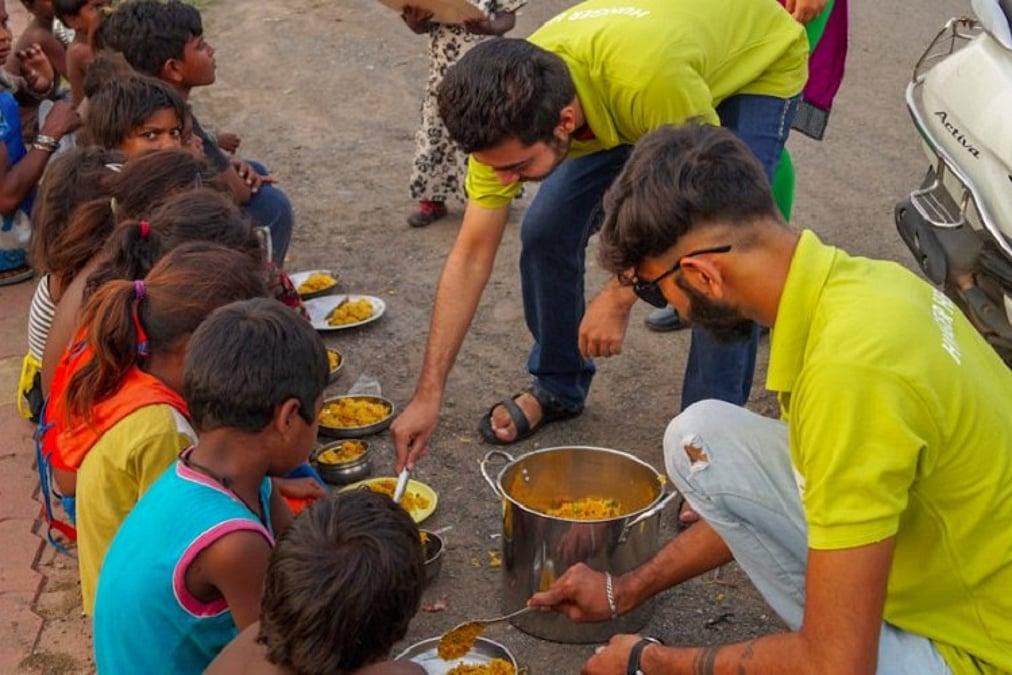
India alone has over 20 million orphaned children. Globally, approximately 811 million people go to bed hungry every night. Food donation drives and orphanage support programs are among the most direct, immediate, and impactful ways to transform not just your own life but entire communities.
When you contribute to an orphanage, you’re not just giving a child food or shelter — you’re giving them a future. You’re saying: your life matters. That act of recognition is transformative for the child. But here’s the secret: it’s equally transformative for you. There is no achievement, no bonus, no promotion, that produces the kind of deep satisfaction that comes from knowing you gave a child hope.
Legacy is not about being remembered. It’s about having lived in a way that mattered. And charity — whether it’s sponsoring a meal, funding an orphan’s school fees, or donating clothes — quietly, permanently builds that.
Reason 03
Giving Sharpens Your Sense of Purpose
One of the great crises of modern life is the crisis of meaning. We have more conveniences, more entertainment, and more choices than any generation before us — and yet rates of anxiety, depression, and existential emptiness are at historic highs.
The antidote, research consistently shows, is purpose. And purpose, more than almost anything else, is found in contribution.
When you volunteer at a local orphanage every weekend, or commit to feeding the poor through food donation drives, you are not just performing an act — you are becoming someone. You are building an identity anchored in meaning. You wake up on Saturday with a reason to get out of bed that has nothing to do with deadlines, obligations, or scrolling through your phone.
Viktor Frankl, the psychiatrist and Holocaust survivor whose book Man’s Search for Meaning has sold over 16 million copies, put it best: those who had a reason to live — those who felt that their existence served something beyond themselves — were the ones who survived the unsurvivable. Purpose is not a luxury. It is fuel. And helping others is one of the most reliable ways to ignite it.
“He who has a why to live can bear almost any how.” — Viktor Frankl

Reason 04
Volunteering Expands Your Network and Opportunities
Here’s a reason that may surprise you: helping others is one of the most powerful professional moves you can make.
Not because of manipulation or strategy — but because of character. When you show up consistently to give, you attract people of similar values. And the caliber of your network is often the caliber of your opportunities.
Think about it. Charity galas, food donation events, community development initiatives, and foundation work bring together some of the most driven, empathetic, and ambitious individuals in any city. When you volunteer at an old age home or help organize an orphanage fundraiser, you share physical and emotional space with people who are wired to care — and those are exactly the kinds of people who build great businesses, lead great teams, and make great partners.
Beyond networking, volunteering builds transferable skills. Leadership. Empathy. Communication. Crisis management. Project planning. Research on volunteerism consistently shows that people who volunteer are more likely to be hired, more likely to be promoted, and more likely to report career satisfaction than those who don’t.
Service, it turns out, is not just a calling. It’s a competitive advantage.
Reason 05
Education Donations Create a Ripple Effect
Of all the things you can give, education is perhaps the most multiplying.
A meal feeds a child for a day. An education feeds a child’s entire future — and through that child, potentially their family, their village, and their generation. The ripple effects of one sponsored scholarship can be traced across decades and hundreds of lives.
Consider this: according to UNESCO, each additional year of schooling increases an individual’s earnings by 8–10% on average. In developing regions, girls who receive secondary education are 6 times more likely to marry later, 3 times more likely to survive childbirth, and far more likely to educate their own children.
When you donate towards a child’s education — even if it’s a small monthly contribution — you are not just helping one child. You are setting off a chain reaction that your eyes will never fully see. And that’s the thing about transformative giving: you don’t need to witness all of the impact to know it’s real.
Supporting education is also one of the most personally enriching forms of charity. Many donors who fund scholarships report that staying in contact with their scholar — watching them graduate, reading their letters, seeing them go on to become doctors or teachers or engineers — is one of the most profound ongoing joys of their life.
Reason 06
Serving Old Age Homes Teaches You Wisdom
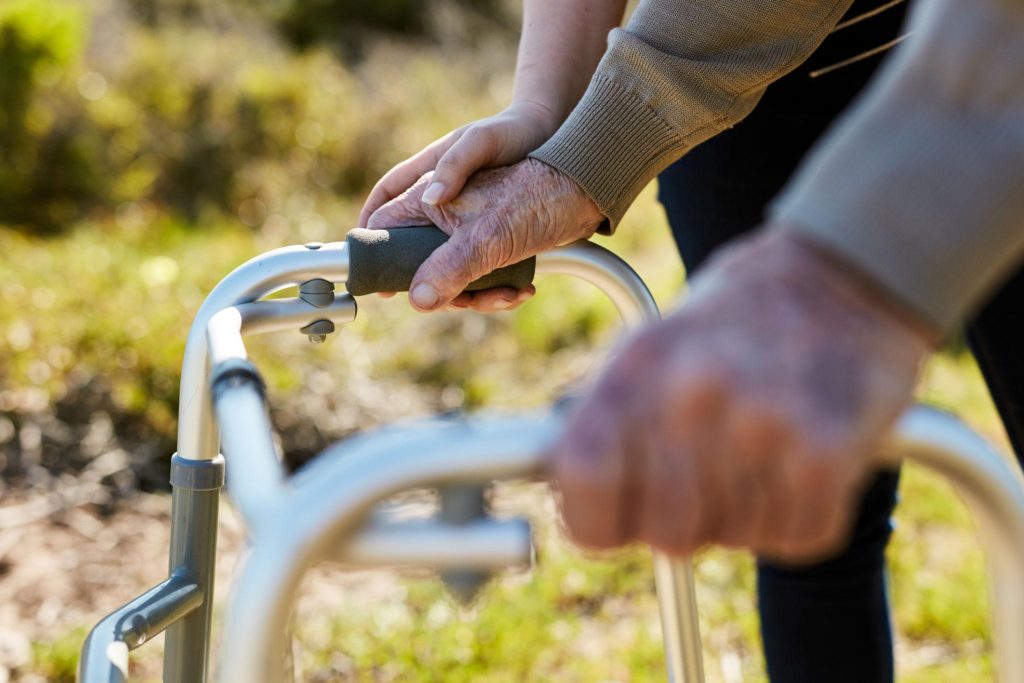
There’s a classroom that no university offers — and it’s found in the quiet rooms of old age homes across the world.
When you sit with an elder who has lived eighty or ninety years, who has built things and lost things, who has loved and grieved and persevered, you receive something that no book or podcast or mentor can give you: perspective.
The elderly teach us about what actually matters. They rarely talk about the deals they closed. They talk about the people they loved. The moments they were present for. The times they gave something of themselves that made someone else’s day brighter. And the things they regret — almost universally — are not the risks they took, but the kindnesses they withheld. The calls they didn’t make. The moments they let pride get in the way of love.
Volunteering at old age homes reconnects you to the long arc of a human life. It humbles you. It reprioritizes you. And in a world where we’re constantly chasing what’s next, that recalibration is not a luxury — it’s a necessity. Many people who begin visiting old age homes describe it as the single greatest shift in their mindset and values that they’ve ever experienced.
You go there to serve. You leave having been taught.
Reason 07
Giving Back Transforms Your Identity — and Your Life
This is the deepest reason of all. Not a mechanism or a benefit, but a metamorphosis.
When you give consistently — when service becomes not an event but a habit, not a one-time donation but a way of living — you undergo a fundamental identity shift. You stop defining yourself by what you have. You start defining yourself by what you contribute. And that shift, quietly and powerfully, changes everything.
It changes how you carry yourself. It changes the kinds of problems you focus on. It changes the conversations you seek out. It changes the kind of success you desire — from accumulation to impact. And perhaps most remarkably, it changes how others see you. People are drawn to those who give. There is a gravity, a warmth, and a trustworthiness that surrounds a person of genuine generosity.
The most successful people in the world — entrepreneurs, leaders, artists, scientists — almost universally cite their relationships and their contributions, not their accomplishments, as the source of their deepest satisfaction. They didn’t find meaning after they succeeded. They found it through giving — and it fueled the success itself.
“All of the money you earn, you earn from society. You should be willing to give back, no matter how big or small your contribution.” — A principle lived by the world’s most transformative givers.
A Living Example of This Philosophy
From a Village in Andhra Pradesh to a Global Stage
Sometimes the most powerful proof of a principle is a life that embodies it. Sateesh Muvva, Chairman of the Srini Group — a diversified enterprise spanning fuel retail, convenience stores, and luxury real estate developments across Australia — is one such example. Born in the small village of Pedaparimi in Guntur, Andhra Pradesh, Sateesh built his business empire from the ground up with nothing but determination, grit, and an unshakeable belief in giving back.
Through the Sri Muvva Foundation, established in memory of his late mother Muvva Hemalatha, Sateesh has brought clean drinking water and advanced sanitation to over 10,000 people in his home village — an investment of ₹20 lakh that will serve the community for the next 25 years. The foundation also supports elder care facilities, scholarships for bright students, and sanitation infrastructure, directly embodying the seven reasons explored in this article.
Beyond India, Sateesh Muvva donated five acres of land to the Dapto Rotary Club in New South Wales and makes regular contributions to cancer research. His guiding philosophy, shared with young entrepreneurs everywhere: “If you have a hundred dollars, try giving back a dollar. Giving doesn’t start after you succeed — it begins the moment you are willing.” His life is proof that helping others and building a successful life are not competing goals — they are the very same journey, walked together, step by step.
-Team Sri Muvva Foundation
Sri Muvva Foundation, a promising NGO, was started by Sateesh Muvva (Sateesh Reddy Muvva), a visionary and proven business leader and serial entrepreneur, at his very young age. The foundation is dedicated to creating positive social impact through meaningful CSR initiatives in Andhra Pradesh and Telengana
FAQ'S
When you help others consistently — through charity, volunteering at orphanages, donating food, or serving in old age homes — your brain releases dopamine, oxytocin, and serotonin, collectively known as the ‘helper’s high.’ Over time, this rewires your emotional baseline, sharpens your sense of purpose, expands your network, and fundamentally shifts your identity from self-focused to contribution-focused. The result is a deeper, more lasting satisfaction than any personal achievement alone can provide.
Research consistently shows that giving back reduces stress hormones (cortisol), lowers rates of anxiety and depression, boosts self-esteem, and increases overall life satisfaction. Volunteers report feeling more connected, more purposeful, and more resilient than non-volunteers. Even small acts — a food donation, a visit to an old age home — trigger measurable improvements in mood and mental wellbeing.
Absolutely. Giving back builds skills like leadership, empathy, communication, and crisis management — all of which are highly valued professionally. People who volunteer regularly are statistically more likely to be hired and promoted. Beyond career, charity builds networks, attracts like-minded driven individuals, and cultivates a reputation of trustworthiness and integrity — all essential ingredients for long-term success.
India alone has over 20 million orphaned children. Donating to orphanages — whether through food, clothing, education funds, or time — directly addresses food insecurity, lack of shelter, and lost educational opportunities. Each donation gives a child the message that their life matters. Beyond the child’s immediate needs, your contribution fuels their long-term development, creating a ripple effect through future generations.
For the community, food donation addresses one of the most urgent global crises — approximately 811 million people go to bed hungry every night. For the donor, regularly contributing to food drives activates the brain’s reward system, creates a consistent sense of purpose, and builds community bonds. It’s one of the most direct, immediate ways to witness real human impact — and that visibility makes it one of the most emotionally fulfilling acts of giving
The most personally transformative forms of giving tend to be those with direct human contact — visiting orphanages, serving meals at food drives, spending time at old age homes — because the emotional feedback is immediate and visceral. Education donations offer the deepest long-term satisfaction through ongoing relationships with scholars. Financial charity builds consistency as a habit. The ‘best’ type of giving is ultimately the one you sustain — regularity matters more than scale.
Yes, the helper’s high is a scientifically documented phenomenon. When you perform an act of kindness or service, your brain releases a cocktail of feel-good neurochemicals: dopamine (reward), oxytocin (connection), and serotonin (mood stability). Neuroscientists at the National Institutes of Health have confirmed that charitable giving activates the same brain regions associated with pleasure, trust, and social bonding. It’s real, repeatable, and cumulative with habit.


