
Why Giving Is the Most Human Thing We Do
Picture this: A child in a remote village in Andhra Pradesh, India, turns on a tap for the first time and watches clean, purified water flow freely into her hands. She has never experienced this before. For her entire life, water — the most basic human necessity — has been scarce, trucked in from far away, and uncertain. And in that singular moment, because someone 7,000 kilometres away decided to give, her world changed permanently.
That is the power of giving.
We live in an era that often conflates giving with wealth. We assume you need a net worth with multiple commas before you have the right — or the means — to make a meaningful difference. But that belief is not only wrong; it’s one of the most costly misunderstandings of our time. It has kept ordinary people on the sidelines of one of the most transformative forces in human history.
The truth? Giving is not a financial transaction. It is a philosophy. It is a lifestyle. And when practised intentionally — even in its smallest forms — it sets in motion a chain of impact that no calculator can fully measure.
This article explores the real, multi-dimensional power of giving: what science says about it, what data confirms about it, what visionary leaders have demonstrated through it, and what everyone of us — regardless of our bank balance — can do about it today.
“All of the money you earn, you earn from society, which allows you to live your life. You should be willing to give back to society, no matter how big or small your contribution may be.”
Beyond the Cheque: What the Power of Giving Really Means
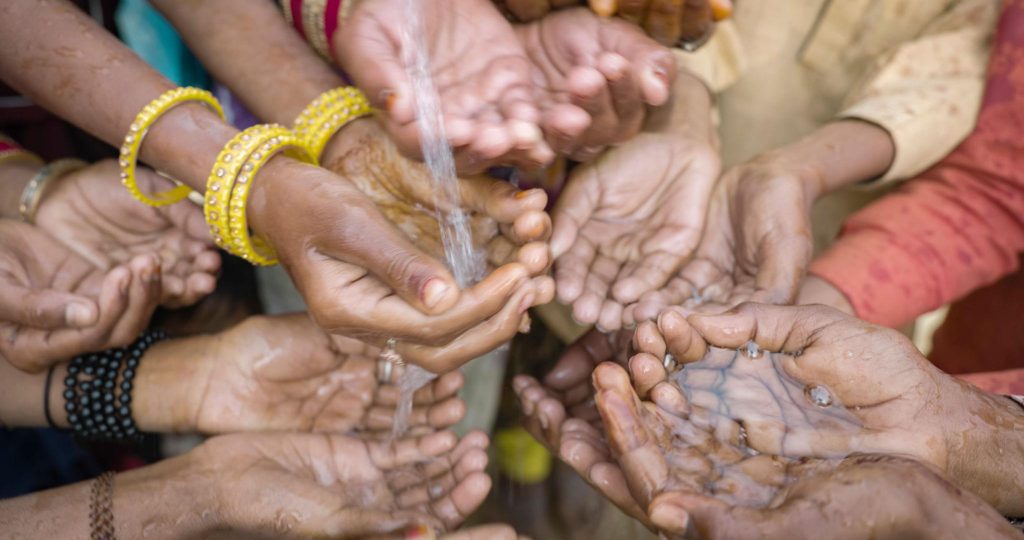
When most people hear the phrase “giving back,” the first image that comes to mind is writing a cheque to a charity. And yes — financial donations fuel enormous good in the world. But reducing the power of giving to its monetary form is like saying music is just sound waves. Technically accurate. Deeply incomplete.
True giving operates across multiple dimensions. It is a practise that engages your time, your expertise, your empathy, your courage, and your platform. The most impactful givers understand this intuitively — they don’t just donate; they participate.
Giving Time and Skills
Time is arguably the most democratic currency on the planet. Regardless of your income, you wake up with 24 hours — the same as every billionaire and philanthropist who ever lived. How you choose to deploy even a fraction of that time in service to others is one of the most powerful decisions you can make.
Research consistently shows that volunteers who donate more than 120 hours per year to causes they care about give nearly three times as much financially as non-volunteers. The act of physically showing up deepens commitment, opens eyes to real-world needs, and creates relationships that money alone cannot buy.
A retired teacher tutors underprivileged students after school. A software engineer spending weekends building a digital platform for a local NGO. A nurse volunteering at a rural health camp on her day off. These are not small acts. They are seismic ones — especially to the person on the receiving end.
Giving Your Voice and Platform
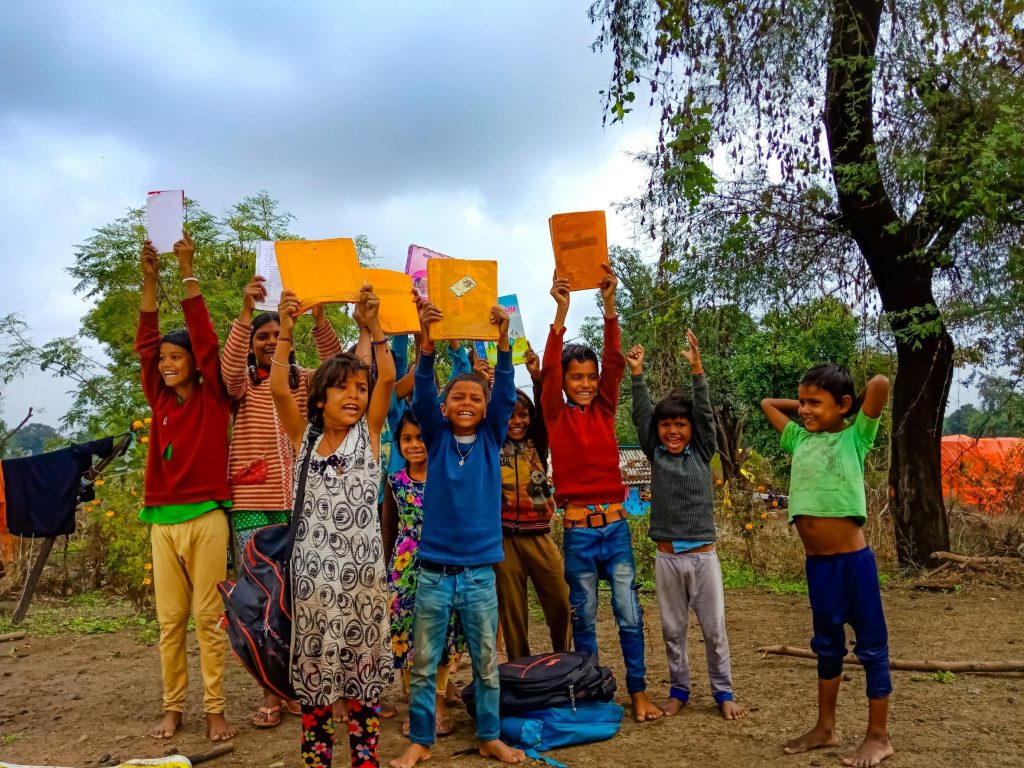
In the age of social media, a platform — even a modest one — is a form of capital. Using your reach to amplify a cause, educate your network, or advocate for the voiceless is a form of giving that costs nothing but carries enormous value. Some of the most important social movements in history were accelerated not by large donations, but by people who chose to speak up.
Advocacy, storytelling, and awareness-raising are forms of giving that compound over time. They shift culture. They changed the policy. They give legitimacy and visibility to the invisible.
The Science Behind Giving: Why Generosity Feels So Good
If you’ve ever experienced the warm, glowing feeling after helping someone, you’ve felt what neuroscientists call the “helper’s high.” And it is absolutely real.
When we give — whether it’s time, money, kindness, or a compliment — our brains release a cocktail of feel-good neurochemicals: dopamine (the reward molecule), serotonin (the mood stabilizer), and oxytocin (the bonding hormone). This is not a metaphor. Brain scans show that the act of giving activates the same pleasure centres as eating good food or falling in love.
Beyond the neurochemistry, long-term studies in psychology reveal that people who regularly engage in prosocial behaviour — giving, volunteering, mentoring — report significantly higher levels of life satisfaction, lower rates of depression, and even stronger physical health outcomes. Giving is, in the most literal sense, good for you.
🔬 What Research Tells Us About Givers
- Regular volunteers show a 40% lower mortality rate compared to non-volunteers (Harvard Health)
- People who spend money on others are measurably happier than those who spend on themselves (Journal of Happiness Studies)
- Children who are taught to give early in life demonstrate higher empathy and social intelligence
- 87% of affluent donors say charitable giving brings them personal fulfillment (Bank of America Study of Philanthropy, 2025)
- Giving reduces cortisol levels — meaning regular givers experience less chronic stress
The data does not lie. Giving is not altruism at the expense of self-interest. It is the highest form of self-interest — a practice that nourishes both the giver and the receiver.
Giving in Numbers: The Global Philanthropic Surge
Here is something remarkable: even in an era of economic uncertainty, geopolitical tension, and lingering post-pandemic anxiety, humanity’s impulse to give is growing — not shrinking.
According to the Giving USA 2025 annual report, US charitable giving reached an estimated $592.50 billion in 2024 — a record high representing a 6.3% increase over 2023 in current dollars. This growth outpaced inflation for the first time in three years, signalling that generosity is not merely a fair-weather virtue. It is a deeply embedded human commitment.
Individual donors remain the backbone of this generosity, contributing an estimated $392.45 billion — roughly 66% of the total. But the landscape is shifting in fascinating ways. Corporate giving surged 9.1%, reaching its highest level ever recorded. Foundation giving continued to grow. And younger generations — Millennials and Gen Z — are reshaping the why of giving, prioritizing transparency, measurable impact, and values alignment over institutional reputation alone.
Globally, an estimated 73% of the world’s population gave money or time to help strangers in 2024. Think about that. Nearly three in four people on Earth participated in some form of generosity. Giving is not a niche behaviour of the wealthy elite — it is a universal human practise.
This philanthropic momentum is not accidental. It reflects a growing collective recognition that the challenges of our time — poverty, inequality, climate, health, education — are too large for governments alone to solve. Civil society, powered by ordinary and extraordinary givers alike, is filling critical gaps. And it is working.

How Giving Transforms Communities, Not Just Recipients
There is a popular misconception that giving flows in one direction — from the generous to the needy. But anyone who has witnessed genuine community-level philanthropy knows the truth: giving creates ripple effects that transform everyone it touches, including the communities that give.
When a water purification system is installed in a remote village, the most obvious beneficiary is the 10,000 people who now have access to clean water. But look deeper. Girls who previously spent hours each day fetching water now attend school instead. Mothers who suffered from water-borne illnesses now have better health outcomes. Local economic activity increases as health burdens decrease. Young people who grow up in that village develop a sense of worth — a sense that someone saw them, valued them, and invested in their future.
And the giving community? They discover purpose. They develop empathy that no classroom can teach. They build relationships across geographies and social divides. They find that their contribution — however sized — was part of something larger than themselves.
This is not sentimentality. It is social capital — one of the most valuable and underrated forces in sustainable human development.
“No one is truly ‘self-made’ — our communities, opportunities, and people shape us. Philanthropy is a responsibility, not a choice.
The Power of Small Acts: You Don't Need to Be a Billionaire
One of the most persistent — and most damaging — myths about giving is the idea that your contribution only matters if it’s large. This myth has kept millions of well-meaning people from acting. It has convinced them that their $10, their two hours, their shared post, or their word of encouragement is too small to matter.
It is not.
Consider the compound effect of small giving: if one million people each donate just one dollar per month to a cause, that’s $12 million per year. If 10,000 people each volunteer one hour per month in their local school, that’s 120,000 hours of mentorship annually. Small acts, practised at scale, become civilization-shaping forces.
But even at the individual level, small giving is never small to the recipient. A meal for someone who hasn’t eaten. A scholarship that allows a first-generation student to enrol in university. A kind word to someone at their lowest point. These are not rounding errors in the ledger of human kindness — they are the ledger itself.
Sateesh Muvva understood this long before he became the Chairman of a multi-division business empire. In the earliest days of his career — when he was working at the bottom of the ladder — he still gave. He started with coins in his pocket. He tells others, “If you have a hundred dollars, try giving back a dollar.” Not when you’re rich. Not when you’ve made it. Now. Always. Whatever you have.
That mindset — that giving is a practice, not a milestone — is what separates truly generous people from those who are merely waiting to become generous someday.

Giving as Legacy: Building Something That Outlives You
The most sobering and clarifying question any person can ask themselves is this: When I am gone, what will remain?
For most of us, the things we accumulate — the cars, the properties, the titles — will mean relatively little in the long arc of time. But the lives we touch? The communities we uplift? The systems we build or improve? Those ripple forward through generations, touching people we will never meet, in ways we cannot imagine.
Legacy is the ultimate expression of the power of giving. And you don’t need to be famous to leave one.
A teacher who pours herself into her students leaves a legacy in every child she shapes. A community leader who fights for better infrastructure leaves a legacy in every family that benefits for decades. A philanthropist who funds a water purification plant — as Sateesh Muvva did in Pedaparimi village — leaves a legacy that will serve 10,000 people for the next 25 years.
This is why more than 55% of families who establish philanthropic foundations do so specifically to create a long-term generational legacy. They understand something profound: the act of giving, when done thoughtfully, becomes the most permanent thing you can do.
The Business Case for Giving: Why Purpose-Driven Companies Win
For business leaders and entrepreneurs reading this, here is an insight that goes beyond philosophy and straight into strategy: companies that embed giving into their core identity consistently outperform those that treat it as an afterthought or a PR exercise.
The numbers are stark. Corporate giving reached $44.4 billion in 2024 — a 9.1% jump, the highest ever recorded. But this is not charity for charity’s sake. Research shows that purpose-driven brands attract and retain better talent, command stronger customer loyalty, and build resilience against reputational crises. In an age where consumers, employees, and investors all increasingly demand alignment between profits and values, giving is not a cost — it is a competitive advantage.
What Purpose-Driven Businesses Do Differently
- They tie philanthropy to their core competency — not separate from business, but integral to it
- They empower employees to participate in giving, creating deep cultural cohesion
- They are transparent about impact — showing donors and stakeholders exactly where resources go
- They give consistently — not just in good years, but as a non-negotiable commitment
- They tell the story of their giving — creating authenticity that no marketing budget can replicate
The Srini Group under Sateesh Muvva’s leadership embodies this philosophy. Philanthropy is not a division that exists separately from the business — it is the heartbeat of the organization’s identity. It is how they recruit, how they present themselves to the community, and how they define success.

Inspired by Real Changemakers
Sometimes, the most powerful arguments for giving are not theoretical. They are human. They have a name, a story, and a village in Andhra Pradesh where the taps now run clean.
Sateesh Muvva
Chairman, Srini Group · Founder, Sri Muvva Foundation · Pedaparimi, Andhra Pradesh → Wollongong, Australia
Born in the small village of Pedaparimi, Guntur district, Andhra Pradesh, Sateesh Muvva’s journey from rural India to the boardrooms of Australia is a masterclass in resilience, focus, and values-driven leadership. After completing his Bachelor of Commerce from Badruka College, Hyderabad, and a Post-Graduate Master’s in Information Systems from Central Queensland University, he arrived in Australia and started — literally — at the bottom.
Two decades later, as Chairman of the Srini Group — spanning fuel retail, convenience stores, service workshops, and real estate development across Australia — his story is remarkable not for the wealth created, but for what he chose to do with it. He gave. He gave early, he gave consistently, and he gave in ways that created lasting infrastructure — not photo opportunities.
In 2014–2015, he established the Sri Muvva Foundation in honour of his late mother, Muvva Hemalatha. The Foundation’s flagship achievement: a ₹20 lakh state-of-the-art water purification plant — equipped with advanced micro and ozone filtration technology — gifted to the 10,000 people of Pedaparimi village. A village that previously relied on imported, uncertain water now has clean, mineral-retaining, bacteria-free water flowing through a system built to serve for 25 years. The Foundation also funded a comprehensive sewage system, elder care facilities, and scholarships for deserving students.
The Srini Group’s proudest commercial milestone — Signature Wollongong (2020), a 22-storey luxury vertical living development and the tallest building in Wollongong — stands alongside the water purification plant as dual symbols of what can be built when ambition is anchored in values.
What makes Sateesh Muvva’s story particularly instructive is not the scale of his eventual giving — it is the philosophy behind it. He didn’t wait to become successful before he started giving. He gave from the very beginning, coin by coin, even before his financial position allowed for large gestures. This reflects a principle that all the world’s greatest philanthropists share: generosity is a habit, not a milestone.
The Sri Muvva Foundation and the Srini Group together demonstrate something powerful: that business success and social responsibility are not competing forces. They are symbiotic ones. When a business is built on the foundation of giving back, it creates not just economic value, but social capital — a currency that may ultimately outlast every financial return.
President of Muvva Trust and a foundational figure in the Sri Muvva Foundation’s establishment, brings decades of social service to the organization’s mission — focused on education, healthcare, and inclusive community development across Andhra Pradesh..
How to Start Giving — No Matter Where You Are in Life
Perhaps you’re reading this and feeling inspired. Perhaps you’re also feeling a quiet uncertainty — Where do I start? What can I actually do? Here is a practical roadmap for beginning a life of intentional giving, regardless of your current circumstances.
🚀 Your Giving Starter Roadmap
- Start with your story. What problem in the world genuinely breaks your heart? The cause that moves you most is likely the one you’ll sustain giving to the longest.
- Give your time first. Before money, give your presence. Volunteer locally. Mentor. Show up. It will teach you more about the cause than any website will.
- Automate small donations. A recurring $10 or $20 monthly donation requires no discipline — it runs itself. Over a year, it compounds into a meaningful impact.
- Use your skills intentionally. Are you a lawyer, designer, writer, or accountant? Organizations desperately need skilled volunteers. An hour of your professional expertise can be worth thousands.
- Tell the story. Share what you’re doing and why. Normalize giving in your network. One post can inspire ten others to act.
- Grow as you grow. Don’t wait until you’re “ready.” Commit to giving a percentage of your income — start at 1%. Scale as your capacity scales.
The most important step in any giving journey is the same as in any other: simply beginning. Don’t let the perfect be the enemy of the good. A dollar given today creates more real-world value than a million promised for tomorrow.
Conclusion: Give First. Grow Always.
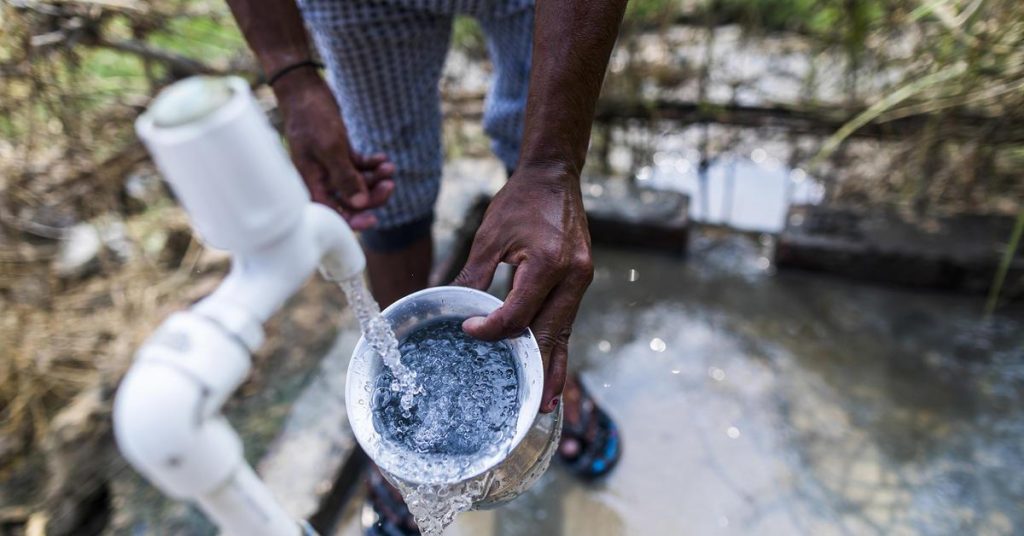
We began with a child in a village, turning on a tap for the first time. We end here, in the quiet recognition that the person who made that happen — and the thousands of people like them across the world — did not stumble into generosity. They chose it. Deliberately. Repeatedly. Often long before they had the means that the world would consider “sufficient.”
The power of giving is not a function of your bank account. It is a function of your consciousness — your awareness that you are not separate from the world around you, but deeply, inextricably part of it.
When Sateesh Muvva gave his first coin, he wasn’t being naive about his circumstances. He was being clear about his values. And those values — compounding over decades, through a business built on integrity, through a foundation built on love for his mother and community — became a purification plant that serves 10,000 people a day.
Your coin, your hour, your story, your skill — these are not small things. In the right hands, at the right moment, in the right community, they are everything.
So give today. Give small. Give consistently. Give with intention. And watch what grows.
-Team Sri Muvva Foundation
Sri Muvva Foundation, a promising NGO, was started by Sateesh Muvva (Sateesh Reddy Muvva), a visionary and proven business leader and serial entrepreneur, at his very young age. The foundation is dedicated to creating positive social impact through meaningful CSR initiatives in Andhra Pradesh and Telengana


