
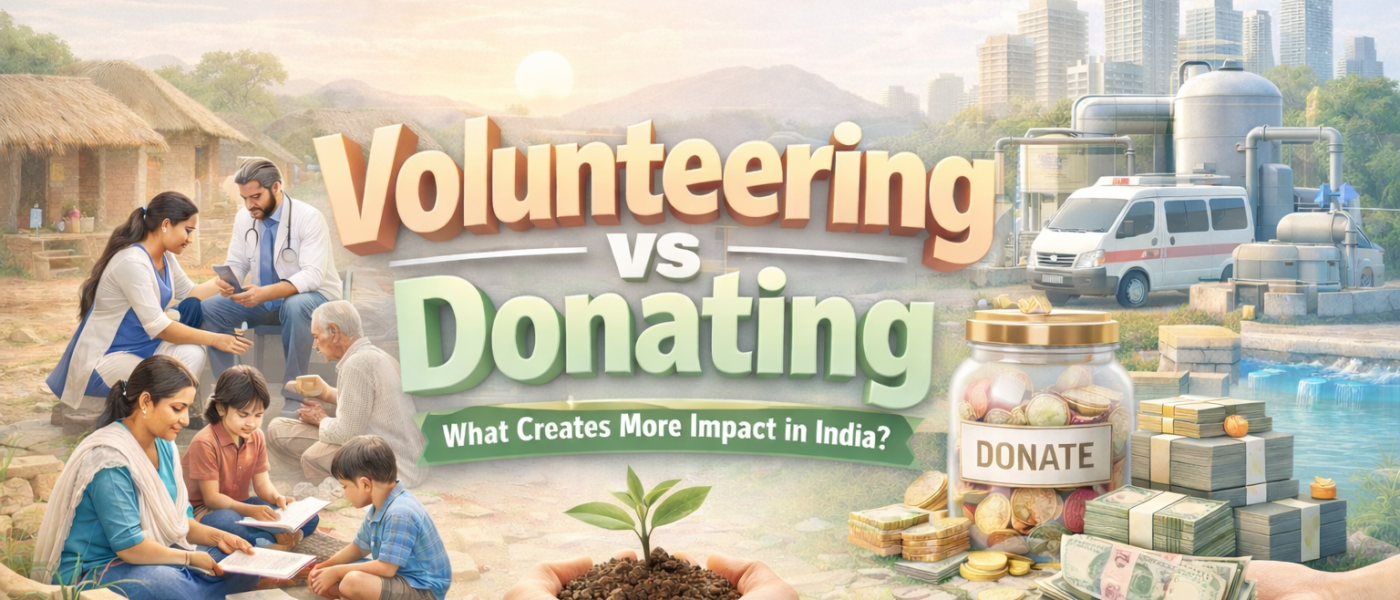
The Question Every Conscious Indian Is Asking
You want to make a difference. You see the news, visit a village, or scroll past a charity post — and something inside you stirs. But then comes the question: Should I give my time, or my money?
It’s one of the most honest questions in social impact, and there is no lazy answer here. The debate between volunteering vs donating has real stakes — not just for your conscience, but for the millions of people whose lives depend on how thoughtfully we choose to give.
India, with its staggering diversity of need and its equally staggering reserve of human generosity, is perhaps the most important country in the world to ask this question. From the droughts of Andhra Pradesh to the slums of Mumbai, the how of giving can mean the difference between a short-term fix and a generation-altering change.
At Sri Muvva Foundation, born from the village of Pedaparimi in Guntur District, we have spent years navigating exactly this question — in the fields, in the classrooms, and at the water purification plants we have built with our own hands and our community’s heart. This article gives you the clearest, most data-driven answer we can offer.
Understanding the Core Difference
What Is Volunteering — and Why It Matters
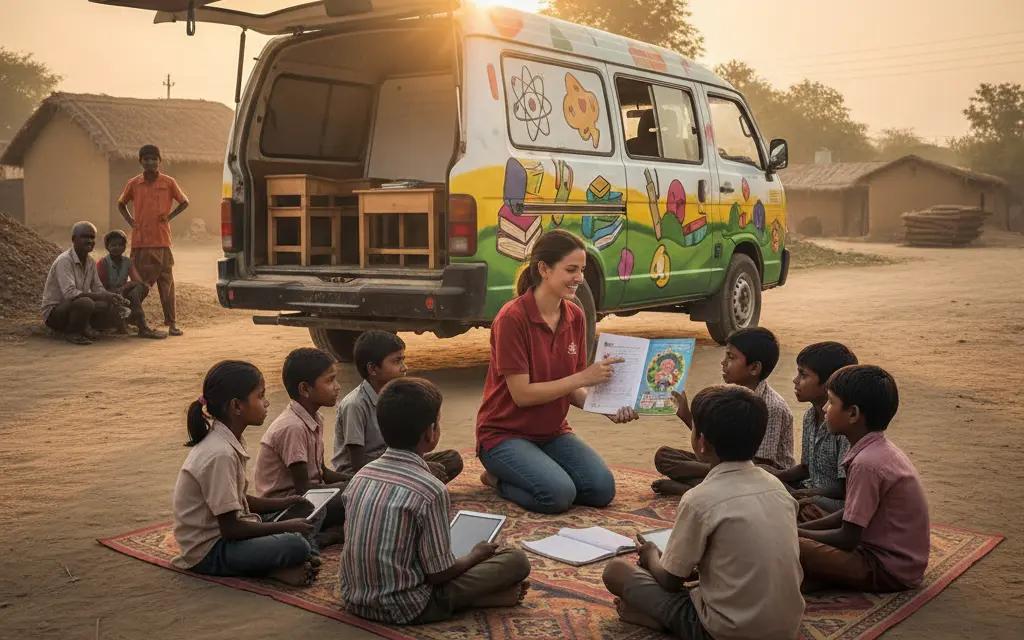
Volunteering is the act of giving your time, skills, or physical presence to a cause without monetary compensation. A doctor spending her Sundays at a rural health camp. A software engineer building a free app for a tribal school. A retired teacher is tutoring children in a shelter home. This is volunteering — deeply personal, directly felt.
In India, volunteering has its roots in ancient traditions of seva (selfless service). From the Bhakti movement to Gandhi’s constructive programme, the idea that one’s labour is one of the most sacred gifts is etched into the culture. Today, approximately 15% of India’s population engages in some form of volunteer work, driven largely by community and religious ties.
Did you know? Globally, the estimated worth of volunteer time exceeded $390 billion USD in 2024 — more than the GDP of many nations. In India, that number is growing fast.
What Is Donating — and When Money Speaks Louder
Donating is the act of contributing financial resources to an organisation or cause. It is scalable, fast, and can unlock interventions that no single volunteer could accomplish — a water purification plant, a scholarship fund, an ambulance for a remote clinic.
India is quietly a giving giant. India has the greatest number of people volunteering and donating money in the world — ahead of both the USA and China. Everyday giving in India was estimated at over ₹34,242 crore, more than twice the size of everyday giving in China. Yet a massive portion of this flows through informal channels — temples, local causes, neighbours — often invisibly.
The challenge with donations, however, is accountability. Money can disappear without a paper trail, and without direct engagement, donors rarely see or feel the impact of their contribution. This is a key reason why the question of volunteering vs donating is not just philosophical — it is intensely practical.
The Impact Data You Need to See
Before we declare a winner, let’s look at the numbers that shape this conversation:
970M
People volunteered worldwide in 2024 — roughly 12.5% of humanity
₹34K+
Crore in everyday charitable giving in India annually
15%
Indians actively volunteer in community-based programmes
29.2%
Corporate workforce participation in volunteer programmes in India (2024)
67%
Local donors also volunteer — the two reinforce each other
27%
More likely to find employment: volunteers who were previously unemployed
These numbers reveal something profound: volunteering and donating are not opposites — they are complements. The most engaged communities tend to do both. And the data confirms that the more someone volunteers, the more likely they are to donate, and vice versa.
“All of the money you earn, you earn from society, which allows you to live your life. You should be willing to give back to society, no matter how big or small your contribution may be.”
— Sateesh Muvva, Founder, Sri Muvva Foundation
Side-by-Side Comparison: Volunteering vs Donating
|
Factor |
🌿 Volunteering |
💛 Donating |
|
Primary Resource Given |
Time, skills, physical presence |
Money, assets |
|
Speed of Impact |
Slower, relationship-based |
Immediate (funds deployed fast) |
|
Scale of Reach |
Local/community focused |
Can scale to thousands instantly |
|
Sustainability |
✓ High — builds lasting skills & bonds |
✗ Low if one-time; high if recurring |
|
Personal Transformation |
✓✓ Very high — builds empathy & purpose |
Moderate — emotional distance common |
|
Accountability |
✓✓ You see exactly where effort goes |
Depends on NGO transparency |
|
Accessibility |
Requires time availability |
✓ Can be done from anywhere, anytime |
|
Skill Transfer |
✓✓ Builds community capacity |
Minimal unless for training programmes |
|
Tax Benefits (India) |
No direct 80G benefit |
✓ 50–100% deduction under Section 80G |
|
Best For |
Long-term community development |
Emergency relief, large-scale programmes |
The Indian Context: Why This Question Hits Different Here
India is not a uniform canvas. It is 1.4 billion stories, spread across 28 states, hundreds of languages, and a development gap that defies easy categorisation. A donation-first approach might work in urban Maharashtra; a volunteering-first approach might be the only viable path in a village in Guntur.
The Rural Development Gap
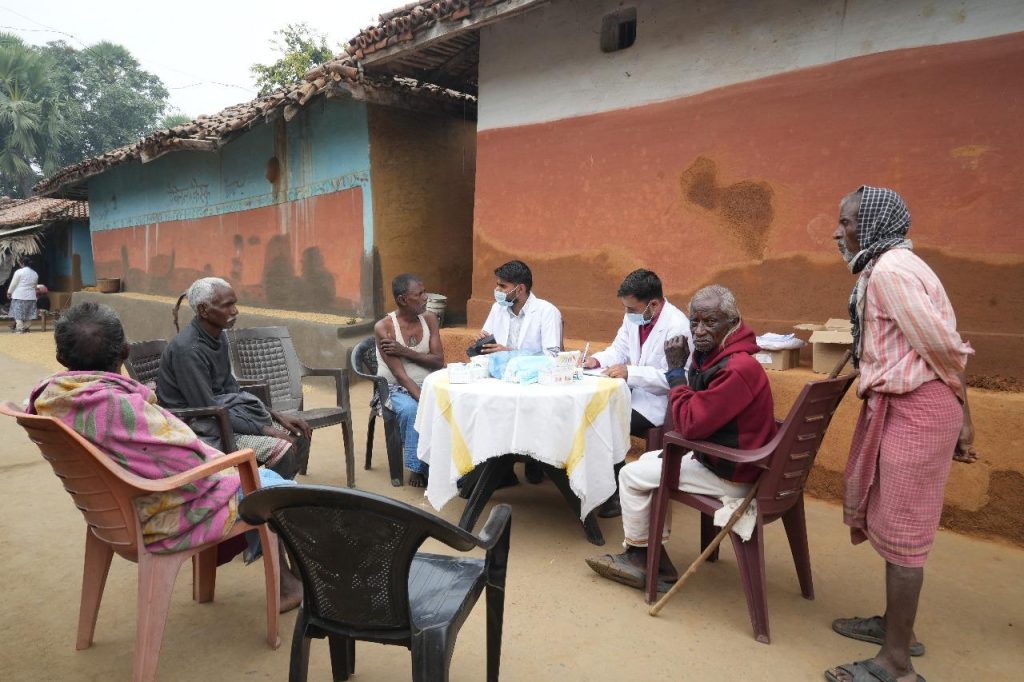
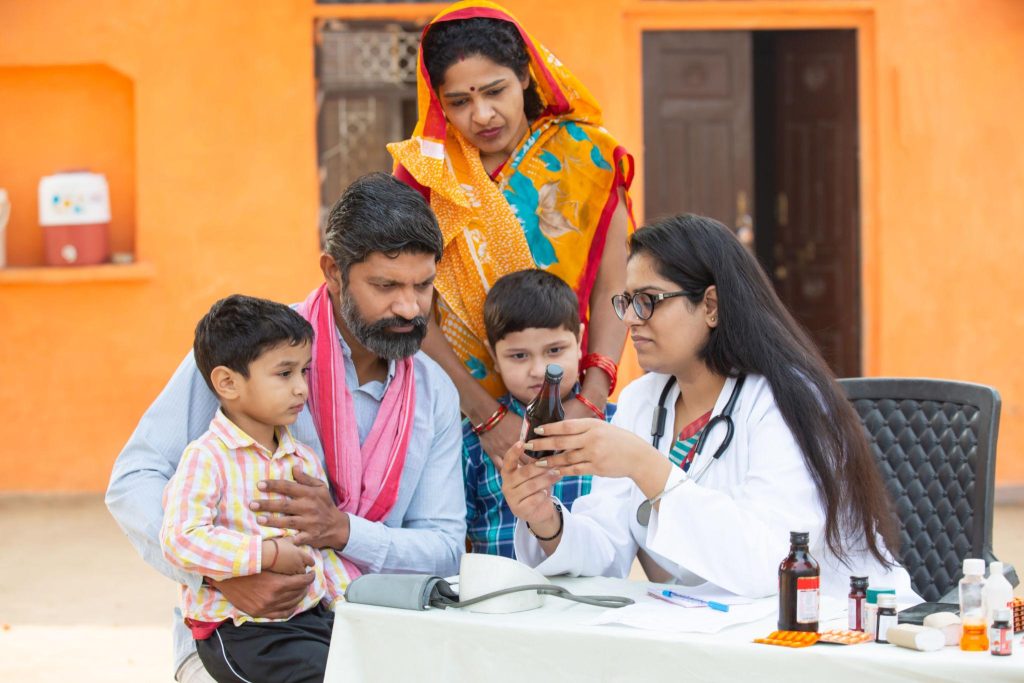
In rural India — where nearly 65% of the population still lives — the greatest deficit is often not money, but human presence and expertise. Villages lack doctors, teachers, engineers, and advocates. A doctor who spends one weekend a month in a rural health camp may save more lives than a ₹10 lakh cheque sent to a faceless organisation.
This is not a criticism of donors. It is a recognition that in India’s development context, skilled volunteering is a deeply undervalued currency. Organisations like Teach For India, SEWA, and Make A Difference (MAD) receive over 20,000 applicants every year for volunteering and fellowship programmes — proof that India’s youth understand this intuitively.
The Power of Corporate Volunteering in India
India’s CSR landscape was transformed in 2014 when the Companies Act made CSR spending mandatory for companies above a certain threshold. But the real evolution is happening at the intersection of time and money. Corporate volunteering programmes in India report a median workforce participation of 29.2%, with technology companies contributing up to 6.8 volunteer hours per employee. When employees volunteer alongside their donations, the impact multiplies.
The Giving Fatigue Warning
Global charitable giving actually declined in 2024, with donations falling 4 percentage points worldwide, driven partly by “philanthropic fatigue” after the pandemic surge. India is not immune. This makes the case for volunteering even stronger — because volunteering builds community bonds and personal investment that sustain motivation when donation fatigue sets in.
When Doing Both Is the Superpower
The 1+1 = 10 Effect
Research consistently shows that 67% of local donors are also active volunteers. This is not a coincidence — it reflects a psychological and relational truth. When you volunteer, you develop a deep, first-hand understanding of a cause. That understanding transforms a passive donor into a strategic one. You know exactly which programme needs funding, which staff member is extraordinary, and which intervention actually reaches the last mile.
Conversely, when organisations have a stable financial base from donations, they can recruit, train, and deploy volunteers far more effectively. Volunteers burn out when they work without resources. Donors lose faith when there is no human accountability. The two forms of giving hold each other up.
Who Should Prioritise What?
- Young professionals (22–35): Prioritise volunteering first. You have skills, energy, and the unique perspective of your generation. Your time is genuinely transformative.
- Busy executives & entrepreneurs: Combine strategic donations with periodic skill-based volunteering (mentoring, legal advice, financial planning for NGOs). Your network is as valuable as your cheque.
- Senior citizens: Volunteering — mentoring, counselling, storytelling — offers extraordinary depth. Your life experience is irreplaceable.
- Students: Volunteer first. It costs nothing except time, builds your character, and will inform your financial giving for the rest of your life.
- Diaspora Indians: Donating is your primary lever — but consider visits and skill-transfer volunteering when possible. Bridge the distance with technology (virtual tutoring, online mentoring).
- Corporates under CSR mandate: A blended model is non-negotiable. Employee volunteer days combined with strategic project funding are the gold standard in India.
How Sateesh Muvva and Sri Muvva Foundation Do It
To understand the volunteering vs donating debate in India, look no further than the story of Sateesh Muvva — entrepreneur, philanthropist, and the founder of Sri Muvva Foundation.
Born in Pedaparimi, a small village in Guntur, Andhra Pradesh, Sateesh started with nothing. He moved to Australia, worked at a petrol station, and built the Srini Group into a multi-division enterprise. But the village never left him. “As things grew in Australia, my heart never left Pedaparimi,” he has said. So in 2015, he founded Sri Muvva Foundation in memory of his late mother, Muvva Hemalatha, not as a charity, but as a responsibility.
What makes Sri Muvva Foundation’s model remarkable is precisely its refusal to separate volunteering from donating. Sateesh didn’t write a cheque and walk away. He researched water infrastructure personally, supervised the installation of the purification plant, and remains actively engaged with Pedaparimi’s development — combining the scale of donation with the accountability of volunteering.
Turning Giving Into Grassroots Transformation
Sri Muvva Foundation is a non-profit organisation committed to empowering underprivileged communities through education, healthcare, and inclusive development in Andhra Pradesh, India.
Clean Water for 10,000+
₹20 Lakh water purification plant in Pedaparimi, operational for 25+ years with advanced ozone filtration technology
Sanitation Projects
Comprehensive sewage systems and toilet facilities for every household in the village
Scholarships
Supporting bright students to pursue higher education and break the cycle of poverty
Elder Care
Safe, dignified spaces for senior citizens of the village to thrive and be honoured
The Philosophy That Drives the Foundation
Sateesh Muvva’s approach carries a philosophy that every Indian philanthropist — and every person asking volunteering vs donating — should internalise: “I’ve never looked at these efforts as charity. To me, they are just extensions of responsibility.”
This framing matters enormously. Charity creates dependency. Responsibility creates partnership. When Sri Muvva Foundation builds a water plant, it does not merely give water — it returns dignity, time (women in rural India spend hours fetching water), and health to an entire community. That is the difference between reactive giving and strategic, sustained impact.
The foundation’s work also embodies the principle that giving does not start after you succeed — it begins the moment you are willing. As Sateesh himself has shared: “If you have a hundred dollars, try giving back a dollar. From the early stages of my career, I initiated charitable endeavours even when my financial resources were limited.”
“Success means little if it doesn’t circle back to uplift, to invest, to inspire the place that first gave you a reason to dream.”
This is volunteering and donating at their highest expression — not as competing choices, but as a unified act of love for one’s roots and one’s people.
How You Can Create Maximum Impact Starting Today
Whether you have five hours a month or five hundred rupees to spare, here is a practical framework to maximise your social impact — Indian-context-ready:
If You Want to Volunteer
- Identify your skill set: Are you a doctor, engineer, teacher, lawyer, designer, or communicator? Skill-based volunteering has 3–5× the impact of generic labour.
- Contact local NGOs, foundations, and community programmes directly. Start close to home — your own district has urgent needs.
- Commit to consistency over intensity. A few hours every month for a year is infinitely more valuable than one intense weekend.
- Explore corporate volunteering programmes if your employer has one — many now offer paid volunteer days.
- For students: Look into Teach For India, Make A Difference, or Sri Muvva Foundation’s own community programmes in Guntur.
If You Want to Donate
- Always verify 80G registration and FCRA compliance before donating to an Indian NGO.
- Prioritise programme expenses over overhead. A trustworthy NGO will show you exactly how your donation is used.
- Consider recurring small donations over large one-time gifts — predictable funding allows NGOs to plan and scale.
- Donate to causes you have direct knowledge of — this builds accountability and reduces the risk of misuse.
- Ask for impact reports. Foundations like Sri Muvva Foundation anchor every rupee to visible, measurable outcomes in the community.
If You Want to Do Both (The Highest Path)
- Start with volunteering to build knowledge, then direct donations to the gaps you personally identify.
- Host a fundraising event and volunteer to organise it — this amplifies your impact exponentially.
- Become a “community champion” — spread awareness, bring others in, and become a connector between donors and volunteers.
The Final Verdict
So — volunteering vs donating: what creates more impact?
The honest answer: it depends on context, but the most powerful answer is both.
Volunteering creates the kind of deep, transformational impact that no cheque can replicate. It builds skills in communities, forges human relationships, and sustains long-term change. In India’s rural development context, especially, skilled volunteering is one of the most underutilised forces for good.
Donating creates the kind of scale and speed that no volunteer hours alone can achieve. A single targeted donation to a verified NGO can bring clean water to 10,000 people for a quarter century — as Sri Muvva Foundation demonstrated in Pedaparimi.
The debate is ultimately a false choice. What India needs — what the world needs — is not a competition between time and money, but a culture of engaged generosity: people who give with knowledge, stay with accountability, and return with more to give.
-Team Sri Muvva Foundation
Sri Muvva Foundation, a promising NGO, was started by Sateesh Muvva (Sateesh Reddy Muvva), a visionary and proven business leader and serial entrepreneur, at his very young age. The foundation is dedicated to creating positive social impact through meaningful CSR initiatives in Andhra Pradesh and Telengana


